Golden hour, defined
Golden hour is when the sun is between 6 degrees above the horizon and 4 degrees below. Blue hour follows at sunset, and comes first at sunrise, while the sun is 4 to 6 degrees below. Near the equator both are short and the same length all year. Further north or south they stretch in winter, and in high summer far north the evening golden hour can run straight into the morning one.
Questions
How do you know if a sunset will be good?
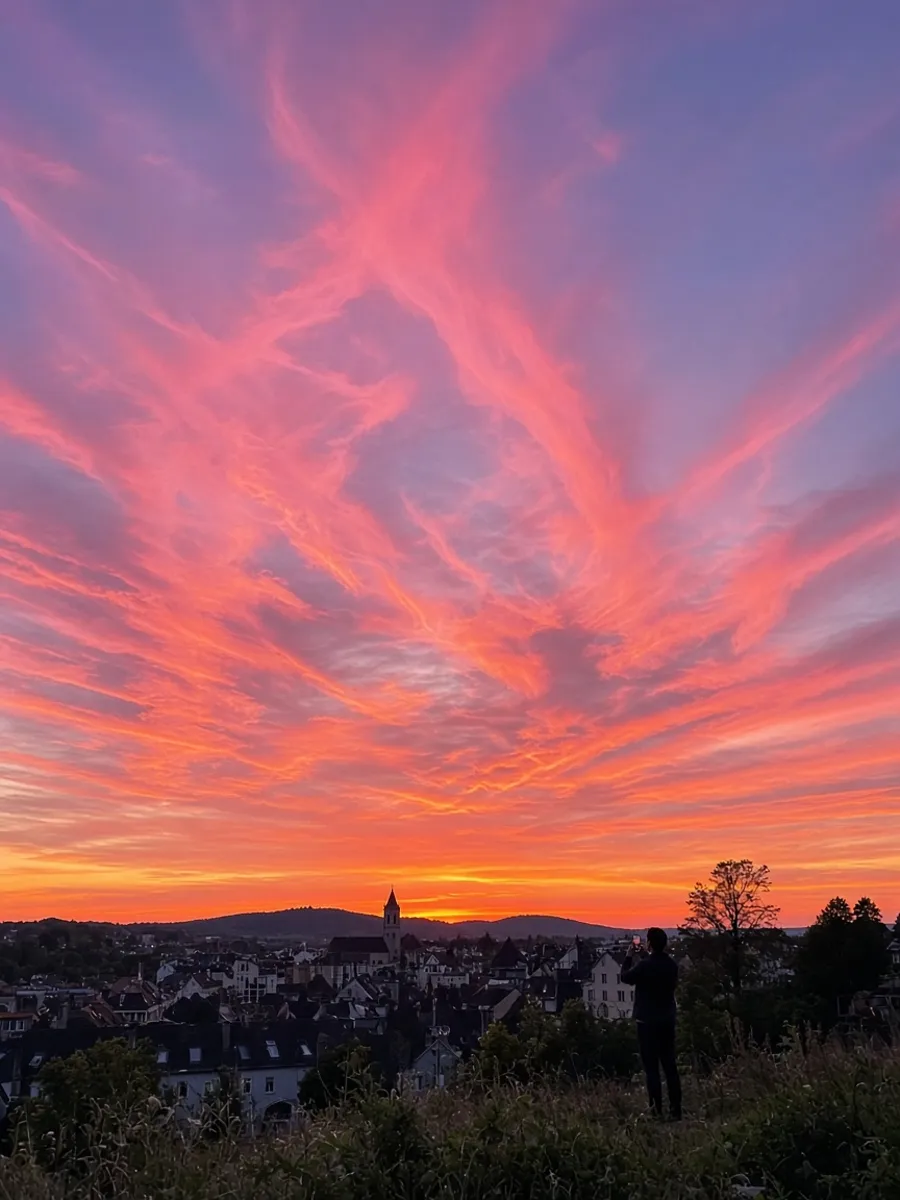
The best colour comes from high and mid cloud overhead that the setting sun can light from below, with a clear horizon in its direction so the light gets through. Afterglow reads the cloud forecast at your spot and about 120 km toward the sun, and turns it into a chance of colour from 0 to 100.
How accurate is the forecast?
It is only as good as the cloud forecast it reads, and clouds are hard to forecast. Tonight is usually close; two days out can change. Check again an hour or two before. Treat the number as odds, not a promise.
What is golden hour?
The time when the sun is low, from 6 degrees above the horizon to 4 below. Light is warm, soft and comes from the side. Around sunset it starts about 40 minutes before the sun goes down in mid latitudes, longer in winter and further from the equator.
What is blue hour?
The short time after golden hour ends at sunset, or before it starts at sunrise, when the sun is 4 to 6 degrees below the horizon. The sky turns deep blue and city lights balance with it, which is why it suits cityscapes.
Which way should I face?
Toward the sun for the colour on the horizon, and keep looking up and behind you: high cloud can glow pink over your head after the sun has gone. Afterglow gives the compass direction for each sunset and sunrise.
Is it free? Where does the data come from?
Free, no account. Cloud forecasts come from Open-Meteo, which serves the main national weather models. Sun times are worked out on your phone. Times are within a minute or two.